
Mulch can help your soil retain moisture, suppress weeds, and give your beds and borders a tidier finish. If you have a dog that dog spends time in the garden, then it is worth choosing the mulch you use, very carefully.
Although many common mulches are not poisonous to dogs this does not necessarily make them safe to chew or eat. For example, bark, wood chips, and other loose materials may cause choking, mouth injuries or intestinal blockages when swallowed. Whist some products may also contain chemicals, and mulches such as those made from cocoa shells presents a more serious poisoning risk.
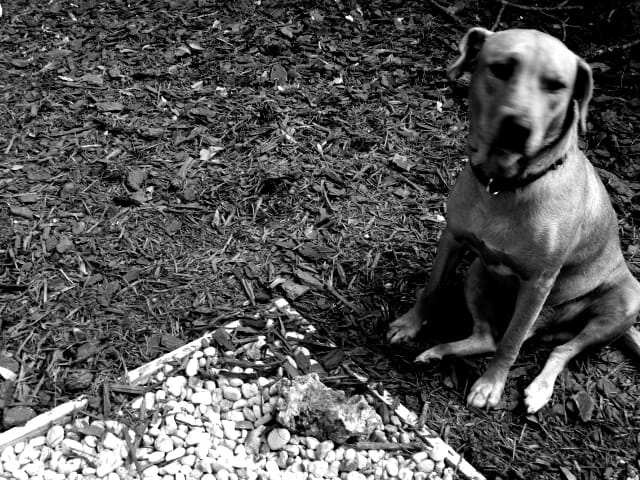
The best choice is usually a clean, untreated mulch that your dog shows little interest in.
You should watch how your pet behaves when the material is first spread, especially if you have a puppy or a dog that likes to chew sticks and other garden objects.
- Many untreated bark and wood mulches can be used around dogs with suitable precautions.
- A mulch described as pet-safe is not necessarily safe for a dog to eat.
- Cocoa shell mulch should be avoided because it can poison dogs.
- Sharp, mouldy or chemically treated mulch may create additional risks.
- Pine straw may suit dogs that ignore it, but sharp needles can cause irritation if eaten.
- Persistent mulch eating may require training, closer management or veterinary advice.
What Makes Mulch Unsafe for Dogs?
Several different features can make a mulch unsuitable for a dog-friendly garden.
The first is toxicity. Cocoa shell mulch contains substances that are poisonous to dogs, while some other products may have been treated with pesticides, preservatives, or weedkillers.
The second is the physical risk created by swallowing loose material.
- Large pieces of bark, wood, rubber or other indigestible mulch may become lodged in the throat or digestive tract.
- Smaller pieces can still irritate the stomach or collect together and contribute to an obstruction. Eating ordinary mulch can result in vomiting, diarrhoea and intestinal blockage, even when the material itself is not poisonous.
- Rough or splintered wood may injure a dog's mouth, throat or digestive tract. Puppies and dogs that enjoy carrying sticks are especially likely to pick up chunky wood mulch.
Organic mulch can also become mouldy when it remains warm and damp. Remove visibly mouldy material before your dog has a chance to investigate or eat it.
The level of risk will depend on the type of mulch, the size and shape of the pieces, how much was eaten, and the size and health of your dog.
Which Mulches Are Safest for Dogs?
There is no loose mulch that is completely safe for every dog. A product that causes no problems for a dog that ignores it may be unsuitable for one that repeatedly chews and swallows pieces.
The following materials are generally among the more practical choices for mulch in a garden for pet owners (provided they are clean, untreated and left uneaten).
Untreated Bark Mulch
Plain bark mulch is often a sensible option for gardens used by dogs. It covers soil effectively, breaks down gradually, and is commonly available.
Choose a product from a reputable supplier and double check that it has not been treated with preservatives, pesticides, or other chemicals.
Medium or finely shredded bark chips used for your landscaping may be less tempting for a dog to carry than large decorative chunks, though be aware that very fine material can cling to paws and coats.
Bark mulch should still be treated as an inedible garden material. Dogs that regularly chew or swallow it may develop digestive irritation or an obstruction.
Untreated Wood Chips
Natural wood chips can work well beneath established shrubs and trees, or in informal garden areas.
Only use wood from a known, safe source. Avoid chips made from painted, stained, preserved or reclaimed timber. Recycled wood mulch may contain material whose previous treatment is not known.
Fresh garden wood chips should be checked for long splinters and sharp fragments.
Chunky pieces may be particularly attractive to dogs that enjoy chewing sticks, so wood chips may not be the best choice for some animals.
Cedar Mulch
Untreated cedar mulch is commonly suggested for dog-friendly gardens and may suit pets that leave it alone. However, it can not be described as being completely harmless.
Its natural oils and dust may irritate a particularly sensitive dog's skin, nose, or respiratory system. Swallowed pieces may also cause stomach irritation, choking, or cause blockage.
Observe your dog after cedar mulch is added to your garden. Consider replacing it if you notice persistent sneezing, scratching or chewing.
Pine Straw and Pine Needles
Pine straw is sometimes recommended as an alternative to cocoa mulch, partly because many dogs show little interest in eating it.
However, I would only use it where the dog reliably leaves the mulch alone.
This is because dry pine needles can be sharp. If swallowed, they may irritate or injure the mouth, throat, or digestive tract. They can also become caught in paws or coats.
Pine straw may be a practical lower-risk option for some gardens, but it is not automatically suitable for puppies or dogs that eat plant material.
Clean Straw
Clean, untreated straw is generally non-toxic and soft underfoot. It can be useful around vegetable plants, soft fruits, and in informal growing areas.
Its disadvantages are mainly practical. Straw may blow around, encourage digging, or provide shelter for rodents. Some dogs also enjoy pulling it apart and eating it.
A few strands are unlikely to cause poisoning, but swallowing a substantial quantity may cause digestive discomfort or blockage. Damp straw can also become mouldy.
Make sure you are buying straw rather than hay. Hay contains more leaves and seeds, decomposes much more quickly, and is more likely to become wet and mouldy.
Shredded Leaves
Clean, dry leaves can provide a useful homemade mulch, particularly when shredded before use. They are generally less likely to splinter than wood chips and also gradually improve the soil as they decompose.
Avoid thick mats of wet leaves, which can become slimy, compacted or mouldy. Do not use leaves collected from roadsides or areas that may have been contaminated with chemicals, oil, or animal waste.
Remove thorny stems, sharp twigs, and any leaves from plants known to be harmful to dogs.
Is Cocoa Shell Mulch Safe for Dogs?
Cocoa shell mulch should not be used in any areas where dogs can reach it.
This mulch is produced from the outer shells of cocoa beans. It may retain theobromine and caffeine, these related substances also responsible for chocolate poisoning in dogs. Its chocolate-like smell can make it especially attractive to curious pets.
Eating cocoa mulch may cause vomiting, diarrhoea, restlessness, a rapid or irregular heartbeat, tremors and seizures. A large ingestion can be life-threatening to a dog.
The amount of theobromine can vary between products, so it is not possible to assume that a particular bag is harmless. Choose an untreated bark or another suitable material instead.
Is Coconut Mulch the Same as Cocoa Mulch?
Coconut and cocoa mulches are different products, despite their similar names.
Coconut coir mulch is made from coconut husks and does not carry the same theobromine-related poisoning risk as cocoa shell mulch. It can still cause stomach upset or blockage if a dog eats a large quantity, so it should not be regarded as totally edible.
Check the packaging carefully if a product name is unclear. Avoid anything described as cocoa, cacao or cocoa bean shell mulch.
Is Dyed Black or Red Mulch Safe for Dogs?
The colour of a mulch does not by itself tell you whether it is safe.
Black mulch may be coloured with carbon-based pigments or iron oxide, while red mulch is often coloured with iron oxide. These colourants are not always the main concern. The source and treatment of the wood can matter more.
Some inexpensive coloured mulches are made from recycled wood. Unless the manufacturer clearly identifies the source, it may be difficult to know whether the material was previously painted, stained, or was treated with preservatives.
Look for a clearly labelled product from a reputable supplier. Even when the dye is described as non-toxic, it's still good practice to prevent your dog from eating the mulch. Dyed wood can still splinter or cause a physical obstructions.
Is Rubber Mulch Safe for Dogs?
Rubber mulch is not poisonous in the same way as cocoa mulch, but it would not be my first choice for an area where a dog regularly plays.
Rubber cannot be digested and may cause an intestinal blockage if pieces are swallowed. Its texture may also encourage chewing in dogs that enjoy rubber toys.
The surface can become hot in direct sunlight, which may make it uncomfortable for paws. Untreated bark or another natural mulch is generally a more practical choice for dog-accessible parts of the garden.
Are Grass Clippings Safe to Use as Mulch?
Fresh grass clippings can be used carefully as a thin mulch around some plants, but they are not ideal for every dog-friendly area.
Never use clippings from a lawn recently treated with weedkiller, pesticides, or other lawn chemicals. Keep your dog away from treated areas for the period stated on the product label.
Do not leave grass clippings in thick, wet heaps. They can heat up, compact, and become mouldy as they decompose. Thin layers should be allowed to first dry out rather than repeatedly piling fresh clippings onto wet material.
Dogs should also be prevented from eating large amounts of decomposing grass or other mouldy garden waste.
Fertilisers Use Can Change the Risk to your Dog
A fairly low-risk mulch may become much less suitable after fertiliser, slug pellets, insecticide, or weedkiller has been applied to the bed.
Organic fertilisers containing blood meal, bone meal, fish meal, or feather meal can be particularly attractive to dogs because of their smell. Eating them may cause digestive distress.
Larger quantities can clump in the stomach, contribute to an obstruction, or cause pancreatitis. Some fertilisers also contain enough iron or other ingredients to cause poisoning.
Store fertilisers securely and follow the instructions on the packaging. Keep dogs away during application and for any specified exclusion period.
Can Mulch Hurt a Dog's Paws?
Finely shredded bark, small wood chips, and clean straw are usually reasonably comfortable underfoot. Problems are more likely with sharp splinters, thorny prunings, coarse bark, shells, or angular stone.
Inspect delivered or homemade mulch before spreading it. Remove wire, nails, glass, plastic, and treated wood fragments.
Dark mulch, stone, and rubber can become hot in strong sunlight. Test the surface with your hand before allowing your dog to walk or lie on it during warm weather.
Is It Safe for Dogs to Smell Mulch?
Smell is an important part of how dogs explore a garden. Fortunately, sniffing clean, untreated mulch is not normally a problem.
The main concern is when a smell attracts them and encourages them to do something. For example, cocoa shell mulch may attract dogs because it smells like chocolate. Compost, manure, and animal-based fertilisers may also encourage digging and eating in your dog.
It's best to keep your dog away from any material with a strong chemical, solvent, or mouldy smell. It is also sensible to prevent access while a dusty mulch is being spread.
Why Does My Dog Keep Eating Mulch?
Puppies often explore unfamiliar objects with their mouths. Adult dogs may also chew mulch because they are bored, anxious, teething, attracted by its smell, or simply enjoy the texture.
Persistent swallowing of mulch and other non-food objects may be a form of the eating disorder pica. Pica describes repeated ingestion of materials such as wood, stones, fabric, plastic, or mulch.
The behaviour can have behavioural causes, but it may also be associated with an underlying health or dietary problem. Contact your vet if the behaviour is frequent, has appeared suddenly, or occurs alongside vomiting, diarrhoea, weight loss, appetite changes, or other symptoms.
How to Stop a Dog Eating Mulch
Changing the material may help, but it will not always stop a determined dog. You may also need to manage access and/or address the behaviour itself.
Supervise your dog in mulched areas and calmly redirect them when they pick up pieces.
Teaching a reliable "leave it" cue can be particularly useful.
You can also:
- install low fencing or edging around beds
- remove loose pieces from paths and lawn edges
- provide appropriate outdoor chew toys
- create a separate digging area
- avoid large wood chunks that resemble sticks
- restrict unsupervised access to newly mulched beds
Do not punish or chase your dog, as this may turn mulch stealing into a game or encourage them to swallow pieces quickly.
Veterinary advice is appropriate if your dog persistently eats mulch despite training and management.
What Should You Do if Your Dog Eats Mulch?
Move your dog away from the area and identify the mulch involved. Keep the packaging or take a photograph of the product if possible.
Contact a vet promptly if your dog may have swallowed cocoa mulch, treated or unknown wood, fertiliser-contaminated material, rubber pieces, or a large quantity of mulch.
You should also seek veterinary advice if your dog develops:
- repeated vomiting or diarrhoea
- excessive drooling
- abdominal pain or swelling
- loss of appetite
- unusual tiredness or weakness
- difficulty passing stools
- restlessness or hyperactivity
- shaking or muscle tremors
- a rapid or irregular heartbeat
- seizures
Do not try to make your dog vomit unless a veterinary professional specifically instructs you to do so.
Choosing the Best Mulch for a Dog-Friendly Garden
For many dog owners, clean shredded bark, untreated wood chips, cedar mulch or dry shredded leaves will be reasonable starting points. Clean straw may also work in productive or informal areas.
Pine straw can be considered where a dog reliably ignores it, but its sharp needles make it a poor choice for dogs that chew or eat garden material.
Cocoa shell mulch should be avoided entirely, while rubber mulch and unknown recycled wood are best kept away from areas where dogs play.
Most importantly, choose the mulch according to your own dog's behaviour. A calm dog that ignores bark may live alongside it without difficulty. A curious puppy that chews everything may require temporary barriers, close supervision, or a mulch surface that cannot easily be picked up.
No loose mulch should be treated as safe to eat. Select a clean, untreated material, keep potentially toxic garden products out of reach, and check regularly that the mulch remains dry, clean, and free from sharp debris.
I hope that you enjoyed this guide on Is Mulch Safe for Dogs? You may also enjoy my gardening guides on how to grow frequently mulched plants such as Phygelius, Cypripedium, and Snapdragons. This post may help you if you have a lot of old mulch that you need to deal with.
